Why a software company built its own five-axis printer
Our printer is an internal test platform that keeps the work on slicing and toolpaths connected to motion, material and a physical result.
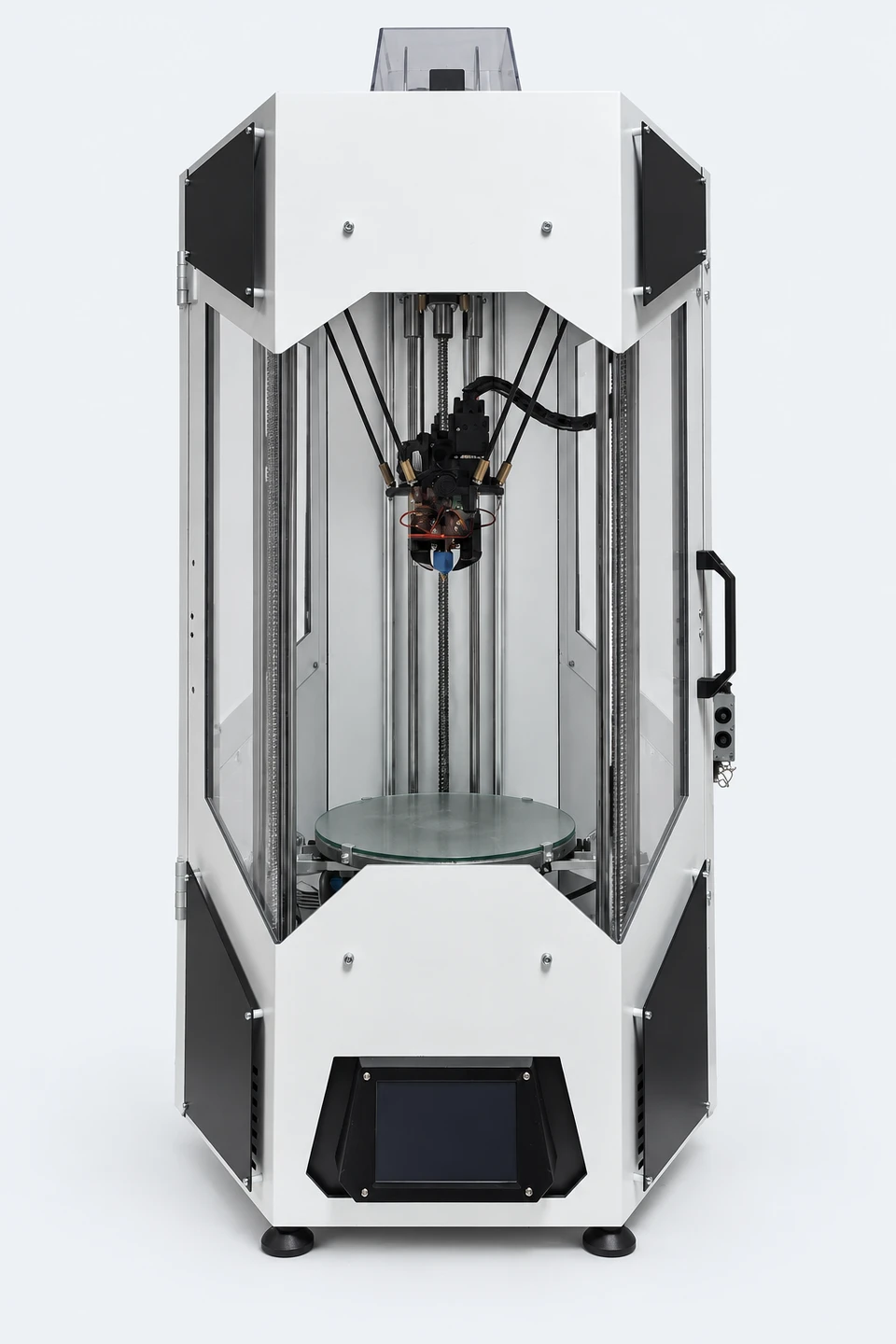
A machine close to the software work
Flexam develops software for industrial additive manufacturing, yet a printer is an important part of our working environment. We built our own five-axis machine so that software-generated toolpaths could be connected with physical motion and material deposition. It gives us a place to examine the assumptions that sit between a model and a printed part. That role is different from announcing a printer as a product for sale.
Our starting point is the preparation work that experienced engineers do around a complex printing job. They connect the geometry of the part with a process and the behaviour of the machine. Our software work addresses parts of that connection through generating, inspecting and adapting toolpaths. Having hardware close to the team makes those questions less abstract when we work through an example.
What becomes visible at the machine
A toolpath view explains the movement that the program is intended to describe. The machine then introduces the practical relationship between that movement and the material being deposited. Calibration, rotation and tilt become things we have to examine in the setup, rather than only discuss on screen. A small test part can make one of those relationships easier to inspect than a complicated demonstration model.
We use the printer as a place to test multi-axis slicing and the behaviour expected from a machine profile. The aim is to connect a particular software decision with something we can observe during a print. When an observation raises a question, we can return to the geometry, path or setup involved. That gives the next software discussion a concrete reference instead of relying only on a plausible-looking visualisation.
A way to explain the work as well
The printer has another useful role when we meet people outside the team. Watching a part being built gives a different starting point for a conversation about the software. Visitors can look at the movement and ask how a chosen strategy relates to the shape. This was one reason for taking our printer to AM Connect in September.
The software remains the centre of our work, with the printer supporting development and testing. A successful example is something to investigate in its own context, including the machine and settings used. What matters for us is keeping the path on screen connected with what happens on the hardware. That connection helps us work through the engineering questions behind a print and explain them more clearly to others.