Toolpath preparation for DED cladding
Prepare deposition paths for worn metal parts, around your repair geometry and robot cell.
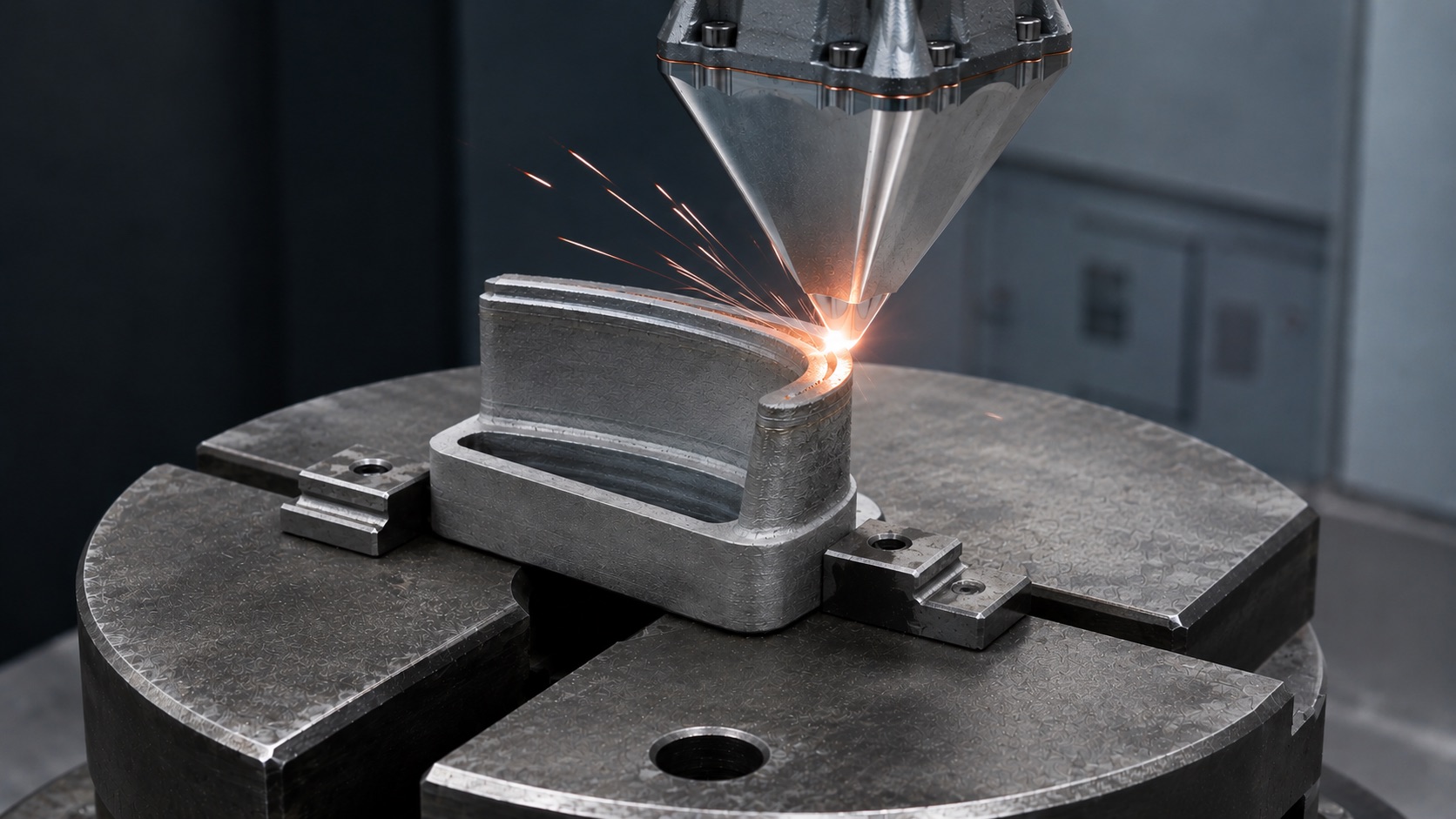
What is DED cladding?
Directed energy deposition (DED) melts wire or powder as it is added to a surface. Cladding uses this process to rebuild worn areas or add a surface layer to an existing component. DED includes laser-based processes and wire arc additive manufacturing (WAAM).
- Repair selected areas while retaining the rest of the component.
- Add material to complex surfaces with a robot or multi-axis system.
- Build near-net repair geometry for subsequent machining.
From repair geometry to cladding toolpaths
Flexam prepares surface-following toolpaths around the deposition zone. The workflow connects part geometry, pass strategy and the requirements of the target cell.
Deposition zones
Define the surfaces to rebuild and the material allowance for finishing.
Pass layout
Plan path direction, overlap and bead spacing around the repair geometry.
Process settings
Configure bead-width targets, travel speed and pass sequencing for the selected deposition process.
Robot and fixture constraints
Include the target kinematics and fixture geometry in the planning and review workflow.
Cell-specific output
Adapt the motion program and process commands to the target controller.
Toolpath review
Inspect the planned passes and transitions before cell validation and deposition.
Planning a repair workflow
- Geometry
- Worn component, deposition zones and finishing allowance.
- Process
- Feedstock, deposition method, bead settings and thermal requirements.
- Machine
- Robot or multi-axis configuration, controller and fixtures.
- Flexam role
- Slicer for path generation; Engineering Services for process-specific algorithms and output integration.
Have a component to repair?
Tell us about the geometry, deposition process and robot cell.