Toolpath planning for concrete 3D printing
Prepare paths for walls and concrete components around geometry, layer timing and machine constraints.
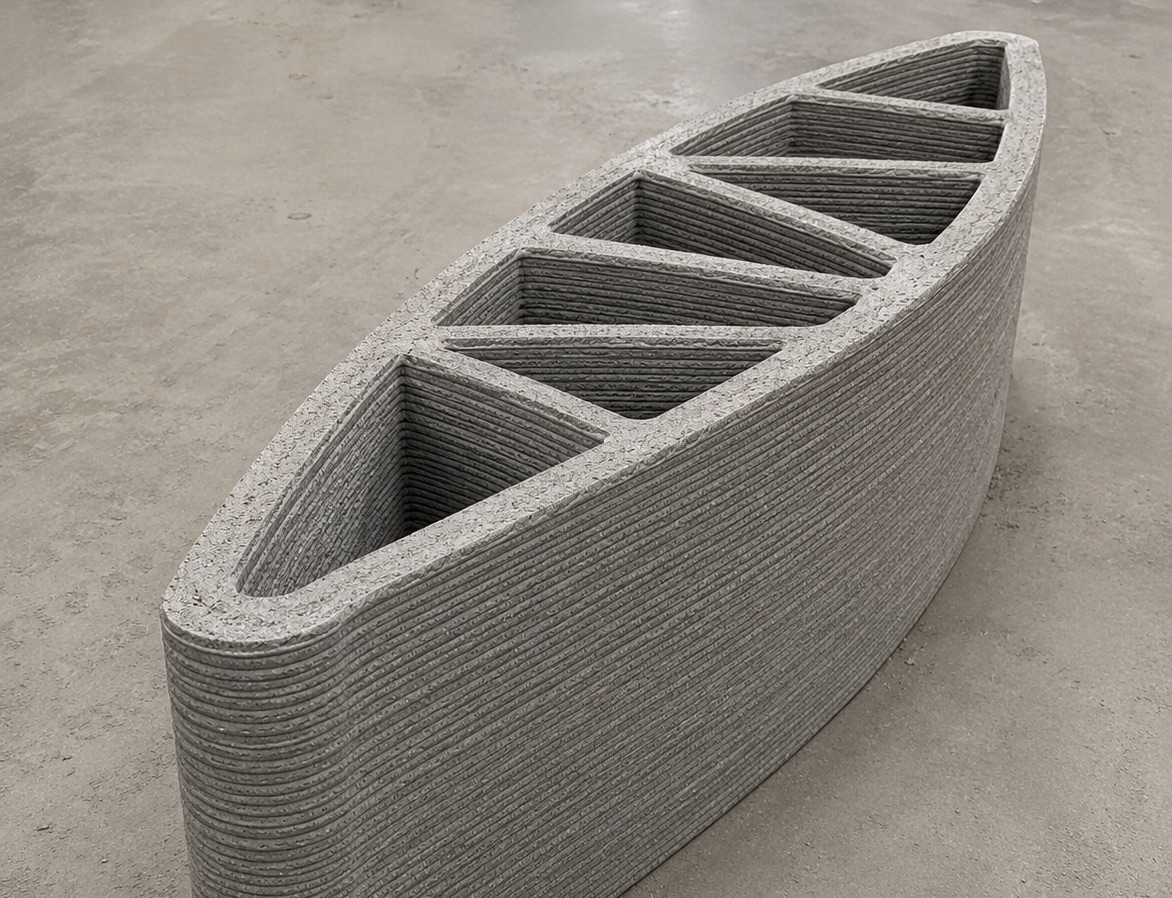
What is concrete 3D printing?
In extrusion-based concrete 3D printing, a nozzle deposits a cementitious mix along a programmed path. Successive layers build the component’s shape. The path and deposition timing must work with the fresh material’s ability to flow, bond and support later layers.
- Create curved and individually shaped components from a digital model.
- Build suitable geometries without conventional formwork.
- Use hollow or differentiated sections to place material where the design needs it.
Connect the geometry to the extrusion process
Flexam develops toolpath workflows around the geometry and operating limits of a concrete printing system. Layer timing, corners and deposition settings are defined together with the process team.
Corners and transitions
Plan speed changes and connections around the machine’s motion limits.
Layer timing
Plan deposition order and pauses against the material’s working window.
Wall strategies
Set path spacing and bead-width targets for the designed wall sections.
Openings and channels
Preserve designed cavities and service routes when preparing print regions.
Pump integration
Engineering Services can adapt process commands and pump coordination to a defined system.
Model preparation
Agree the geometry exchange and preparation steps for the architectural design workflow.
Preparing a concrete printing workflow
- Geometry
- Printable component model, wall sections, openings and designed channels.
- Process
- Mix behaviour, bead dimensions, deposition timing and pumping constraints.
- Machine
- Reach, motion limits and the controller interface of the gantry or robot.
- Review
- Inspect paths and sequencing, then validate deposition and structural requirements for the project.
Have a concrete printing workflow to improve?
Tell us about the component, printable mix and machine setup.