Opening private access to Flexam Toolpath Editor
In July, we opened a private-access stage for teams that work with machine code after slicing, CAM or post-processing.
A focused job for an early editor
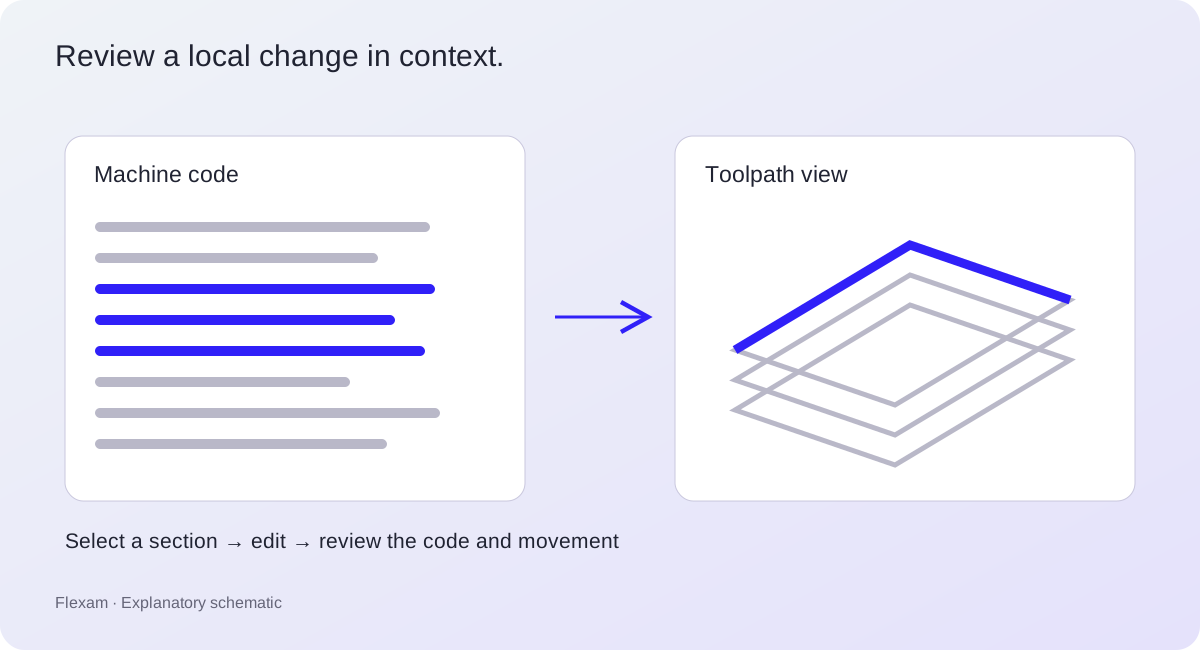
The private-access announcement on 10 July introduced a focused editing workflow for additive manufacturing. The starting point was a file that had already been generated by another preparation step. That could mean code coming from slicing, CAM or post-processing. The question was what an engineer needed when that file still required inspection or a local change.
This was deliberately a different starting point from generating an entirely new toolpath. The engineer already had a program and wanted to understand or adjust part of it. We described the Editor around that existing work, with the code and the path considered together. A private-access stage gave us a way to put that idea in front of people with a relevant workflow.
What the first workflow included
The public description followed a simple sequence, beginning with inspection of an NC or G-code file. The toolpath provides the spatial context for the section being considered. A local edit should have a clear scope, so that the reviewer can follow what is being changed. The next step is to examine the changes and warnings before exporting a changed copy.
That separate copy is an important part of how we described the workflow. It keeps the discussion focused on the relationship between the original file and the proposed modification. An engineer can then review the modified program as an output that still belongs in the wider preparation process. The Editor does not make knowledge of the intended machine and process unnecessary.
Learning before wider access
At this stage, useful feedback needed to describe actual work rather than a general impression of the interface. We wanted to understand whether the relationship between code and path helped someone inspect the file. We also needed to learn which local changes mattered and where the review became difficult. These questions give the development work a more concrete direction than simply adding more controls.
The July announcement introduces a private-access stage for this focused workflow. Access conversations give us a chance to ask about the work a person wants to complete. A model or a view of the current preparation process can make those questions more concrete. The immediate task is to learn from the inspection and editing work people already have in front of them.